
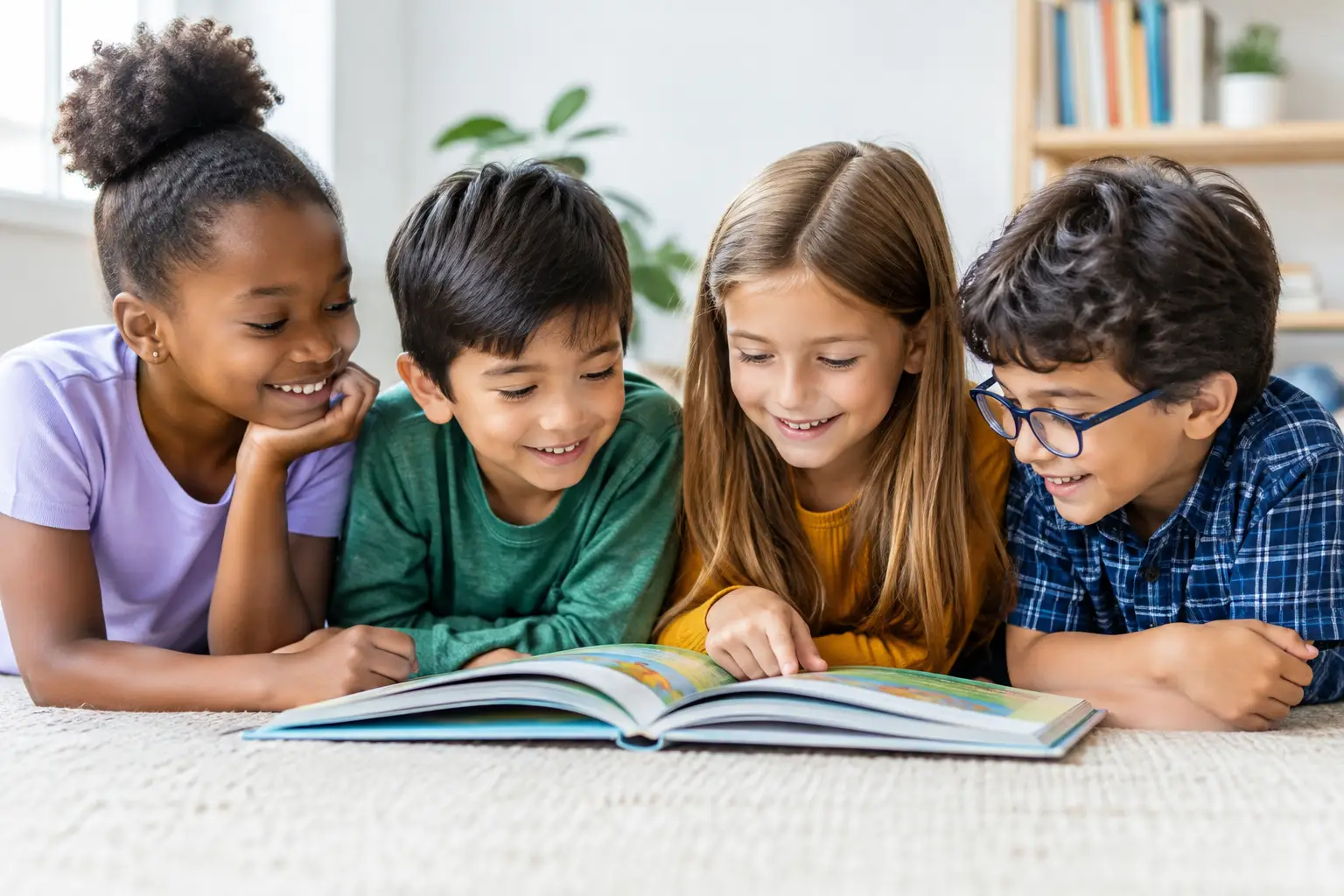
A child notices who is invited into a story long before they can explain what representation means. They notice who gets to be brave, who is listened to, who is treated kindly, and who seems to belong without having to change. That is why asking what makes books inclusive is more than a question about a book’s cast of characters. It is a question about the messages children carry from story time into the classroom, the playground, and home.
Inclusive books help little kids make sense of a big world while reminding them that their own feelings, families, bodies, cultures, abilities, and questions have a place in it. For adults, they can create a gentle opening for conversations that might otherwise feel hard to begin.
What Makes Books Inclusive?
An inclusive children’s book welcomes a wide range of human experiences with care, specificity, and respect. It does not treat one kind of child or family as the unspoken default while everyone else appears only as a lesson, a side character, or a problem to solve.
This does not mean every book must try to represent every experience. No single story can do that well. Instead, inclusion asks whether a story makes room for people to be fully human: joyful, worried, playful, capable, complicated, loved, and connected to others.
For young readers, the strongest inclusive books often do two things at once. A child can recognize something true about themselves, and they can grow curious about someone whose life or feelings may be different from their own. Both kinds of recognition matter. Children deserve mirrors that say, “I see you,” and windows that say, “There is more to learn about someone else.”
Representation That Feels Like Real Life
Seeing a variety of identities on the page matters, but meaningful representation is about more than counting differences in the illustrations. A character should have a life beyond the trait that makes them seem different from others.
For example, a child who uses a wheelchair can be funny, determined, frustrated, imaginative, and central to the action. A family can have a meaningful role in the story without being presented as unusual or needing to explain itself. A character’s culture can be present through family routines, language, food, celebrations, and values without being reduced to a costume or a single holiday.
Children are quick to sense when a character has been included only to fill a space. They also notice when characters who are different are always sad, dependent, saintly, or in need of saving. Inclusive stories give children dignity. They allow them to make choices, contribute, make mistakes, and be seen as whole people.
Representation can also be quiet. Not every inclusive moment needs a speech or a lesson. Sometimes it is simply a classroom illustration where children have different skin tones, family structures, communication styles, and ways of moving through the world. When variety appears naturally, it tells children that human difference is an ordinary part of community.
A Story Is Not a Checklist
Adults choosing books may feel pressure to find stories that cover every important topic. That wish comes from a caring place, but it can turn reading into an assignment. A more helpful approach is to build a varied bookshelf over time.
Choose stories with different kinds of heroes, settings, families, emotions, and conflicts. Include books in which differences are openly discussed, along with stories in which children from many backgrounds simply get to have an adventure, solve a mystery, care for a pet, or enjoy a silly day. Children need both.
Respectful Language and Images
Words and pictures shape a child’s first ideas about who is worthy of respect. Inclusive books avoid stereotypes, labels that diminish people, and illustrations that exaggerate features for a joke. They also avoid presenting a group as if everyone within it thinks, looks, or lives the same way.
This takes thoughtful attention because older books may contain messages that no longer reflect the care we want to offer children. A book can be beloved and still deserve conversation. If a story includes a hurtful image or idea, an adult can pause and say something simple: “That part does not feel kind or fair. What do you notice about it?” Children do not need adults to pretend every book is perfect. They need adults who can help them think.
Respectful storytelling also leaves room for the words families and individuals use for themselves. For young children, the clearest language is usually direct, calm, and free from shame. The goal is not to make every moment heavy. It is to show that questions can be met with honesty and kindness.
Characters Need Agency, Not Pity
One of the clearest signs of inclusion is agency. Does a character get to act, decide, help, change their mind, or influence what happens next? Or does the story happen around them while someone else speaks for them?
Books about exclusion can be valuable, especially when they help children recognize unfairness. Yet it is worth looking at how the story resolves. Does a child gain belonging only by becoming more like everyone else? Is acceptance offered as a reward for being exceptionally good? Does a character need rescuing rather than support to participate on their own terms?
A more inclusive story makes space for mutual learning. Perhaps one character learns to listen. Perhaps a group changes a rule that was leaving someone out. Perhaps friends discover that they share a feeling even when their experiences are not identical. These moments teach children that belonging is something a community practices together.
Feelings Make Inclusion Understandable
Children often understand big social ideas through feelings first. A preschooler may not yet grasp a conversation about bias or fairness in abstract terms, but they know what it feels like to be left out of a game, misunderstood, laughed at, or welcomed in.
That is why emotionally honest stories are such powerful tools. They help children name feelings like loneliness, embarrassment, jealousy, confusion, pride, and hope. They also show that difficult feelings do not make someone bad. A child can feel nervous about difference and still learn to respond with curiosity. A child can make an unkind choice and still repair the relationship.
Stories that make room for inner feelings can be especially helpful because not every difference is visible. Some children process the world differently, carry worries others cannot see, or have experiences they do not yet know how to explain. When books treat emotions with gentleness, they widen the circle of belonging.
The Adult Conversation Is Part of the Book
For children ages 4 to 10, inclusion grows through conversation as much as through reading. The story offers a shared moment. An adult’s questions help a child connect that moment to their own life.
You do not need a perfect script. A few open questions can do a great deal: “How do you think that character felt?” “What helped them feel included?” “Have you ever had a moment like that?” “What could a friend do next time?”
Listen before correcting. A child may say something surprising, awkward, or incomplete. That is often an invitation to guide them, not a reason to shut the conversation down. You might respond, “I can see why you wondered that. People can be different in many ways, and everyone deserves kindness.”
Books with built-in discussion prompts can make this easier for parents, grandparents, teachers, and librarians. At BlueHandTurtle, the Read-And-Talk-With-Me approach makes room for this kind of shared reflection, pairing imaginative story time with questions children can truly answer. A hidden-character search can help, too. Play keeps younger listeners engaged, while the conversation gives the story room to stay with them.
How to Choose Inclusive Books With Care
Before bringing a book into a home or classroom, take a few minutes to look beyond the cover. Who is at the center of the story? Who gets to speak? What assumptions does the story make about families, bodies, homes, language, or friendship?
Notice whether difference is connected only with hardship. Children should encounter stories about challenge, but they also need joy-filled books where diverse characters are loved, clever, adventurous, and ordinary. Look for illustrations that give each child individuality rather than relying on broad visual shortcuts.
It also helps to consider the child in front of you. A book that starts a wonderful conversation with one child may feel too close to home for another on a particular day. There is no single right choice. Read with attention, offer reassurance, and let children know they can ask questions or take a break.
An inclusive book does not ask children to ignore differences. It helps them see difference without fear, meet it with respect, and recognize the feelings that connect us. When a child closes a book feeling more seen, more curious, or more ready to make room for someone else, story time has done something quietly beautiful.
Would Love to Hear What You Think!