
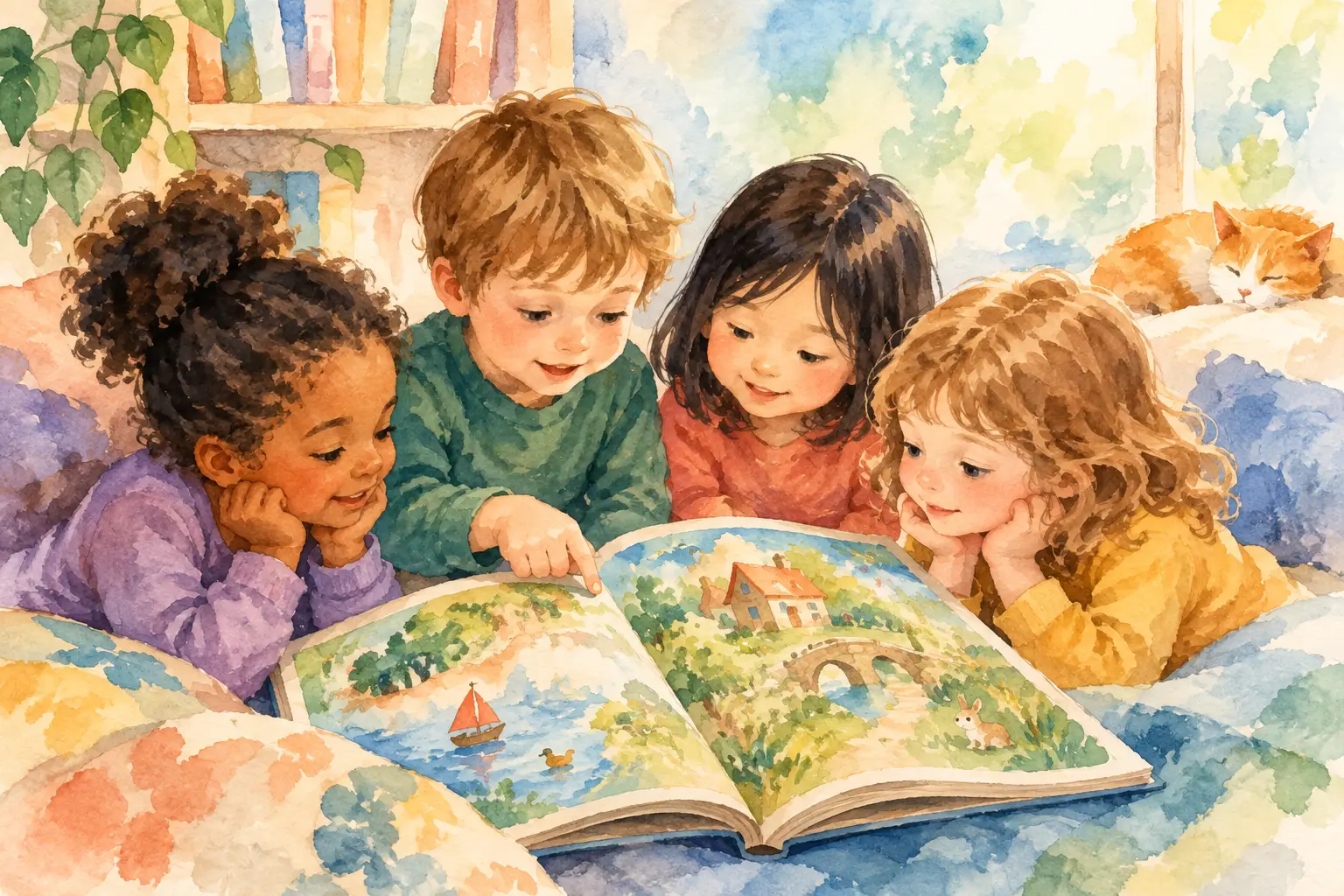
A preschooler who spots a tiny turtle behind a leaf is not “just” finding a picture. They are practicing patience, noticing detail, and feeling the bright little pride of saying, “I found it!” Hidden picture books for preschoolers make room for that kind of shared discovery. They invite children to slow down with a grown-up, look again, and talk about what they see and feel.
For little kids with big questions, this playful pause can be especially meaningful. A story may introduce a character who feels different, left out, confused, or hopeful. The hidden details give children a gentle way into the page before an adult asks anything personal. Sometimes the search is simply fun. Sometimes it helps a child feel safe enough to begin a bigger conversation.
Why Hidden Picture Books for Preschoolers Matter
Preschoolers learn through their whole attention. They listen to the words, study the illustrations, point with one finger, and often return to the same page because something catches their eye. A hidden-picture activity honors that natural way of reading. Rather than asking children to sit still and absorb a message, it welcomes them into the story as active participants.
That participation supports early literacy in practical ways. When children scan a page for a small character or object, they build visual attention and learn that pictures hold information. When they describe where they found it – “It is under the red flower” or “I see it by the bird” – they practice vocabulary, position words, and complete thoughts. When they compare what they notice with what someone else notices, they practice listening.
There is also an emotional benefit. Searching together creates an easy moment of cooperation. A child who cannot find the hidden item may accept help from a sibling, friend, teacher, or grandparent. A child who finds it first can learn to give a clue without taking over. These are small interactions, but they carry the building blocks of kindness: waiting, encouraging, sharing, and recognizing another person’s point of view.
The best books do not treat the activity as a prize pasted onto the end of reading time. The hidden picture belongs in the world of the story. It gives children one more reason to look closely at the characters, setting, and mood. A rainy page may hold a tiny friend beneath an umbrella. A busy woodland scene may reward the child who notices who is nearby, who seems lonely, or who is helping.
What Makes a Hidden Picture Book Worth Sharing?
A busy illustration is not automatically a meaningful hidden-picture experience. For preschoolers, the search should feel possible, not frustrating. Very young children often need a clear target and a page that does not overwhelm their eyes. If a book contains too many tiny details or hides the object in an unpredictable way, a child may lose the pleasure of searching and simply ask for the answer.
Look for illustrations with warmth and purpose. The artwork should offer enough to notice without making every page feel crowded. Color, facial expressions, and familiar settings can help children read the emotional life of a story even before they have words for it. A hidden character can add playfulness, but it should not distract from a tender moment or make a serious theme feel confusing.
The story matters, too. Preschoolers do not need a lecture about empathy, identity, or fairness. They need characters whose feelings make sense. A child may not say, “This story helps me understand belonging,” but they may say, “Why was he by himself?” That is the opening. A good picture book trusts the child’s question and gives the adult room to respond with care.
Books are particularly valuable when they show differences without making difference the problem to be solved. Children notice skin color, bodies, family structures, abilities, languages, personalities, and emotions. A thoughtful story can acknowledge those observations while showing that every child deserves respect, friendship, and a place in the group.
Make the Search Part of the Conversation
The most useful hidden-picture books do not require an elaborate lesson plan. A few unhurried questions can turn the search into a small, caring ritual. Start with curiosity about the page itself: “What do you notice?” or “Where do you think our little hidden friend might be?” Allow time. Silence is part of looking.
After the child finds the picture, gently connect the activity to the story. You might ask, “What do you think the turtle sees from there?” or “How do you think this character feels right now?” If the child answers with only one word, that is enough. Preschoolers often need time and repetition before they offer more.
It helps to avoid turning every page into a quiz. The goal is connection, not a correct response. If a child wants to keep searching, let the page remain playful. If they begin talking about a character’s sadness, anger, or worry, follow that thread. Their response may be about the story, or it may be a quiet way of talking about their own day.
A simple rhythm can work well at home or in a classroom: read the page, look for the hidden detail, notice one feeling, and share one thought. In a group, adults can invite more than one answer. “I heard Jordan say the fox looks nervous. Maya thinks the fox is excited. What do you see?” Children learn that people can look at the same picture and notice different things.
When a Child Wants Help
There is no need to insist that every child find every hidden object alone. Offer a clue that preserves the joy of discovery: “Try looking near something green,” or “I see it on the left side of the page.” If the child still wants the answer, point it out warmly and celebrate the next chance to look.
Some children enjoy searching immediately; others want to hear the whole story first. Either approach is valid. A child who moves quickly through pages may need a shorter, more energetic reading experience. A child who lingers may be gathering details that matter to them. Follow the child more than the activity.
Choosing Books for Home, School, and Shared Reading
The right book depends on the moment and the children in front of you. For bedtime, a calm story with gentle illustrations and one hidden feature per spread may help a child settle into connection. For a preschool classroom, a book with visible emotional cues and open-ended discussion possibilities can support a circle-time conversation. In a library or mixed-age family gathering, a search activity gives younger children something to do while older children consider the story’s deeper questions.
Consider whether the book gives adults support after the final page. Discussion prompts can be helpful when a story touches on identity, acceptance, or a child’s sense of being different. They should feel like invitations, not scripts. The best prompts encourage adults to listen as much as they speak.
BlueHandTurtle’s Read-And-Talk-With-Me approach reflects this balance: a story children can enter, a hidden-character search that keeps little eyes engaged, and questions that help caring adults stay present when meaningful feelings arise. The activity is not separate from the message. Looking closely at a page becomes practice for looking closely at one another.
It is also wise to leave room for a child’s boundaries. If a story brings up a hard topic and a child says, “I do not want to talk about that,” you can honor the response. Stay nearby, keep the door open, and return to the story another day. Emotional learning grows through safety, not pressure.
A Small Ritual With a Lasting Feeling
Hidden details invite rereading, and rereading is where many beloved books become part of family life. The first time, a child may search for the little character. The next time, they may notice the worried expression on a rabbit’s face or the friend standing close by. Weeks later, they may use the story’s language to describe a feeling of their own.
That is the quiet gift of a well-chosen picture book. It offers children a playful reason to look closely, then reminds them that people are worth looking closely at, too. Sit beside them, turn the page slowly, and let the smallest discovery become an opening for kindness.