
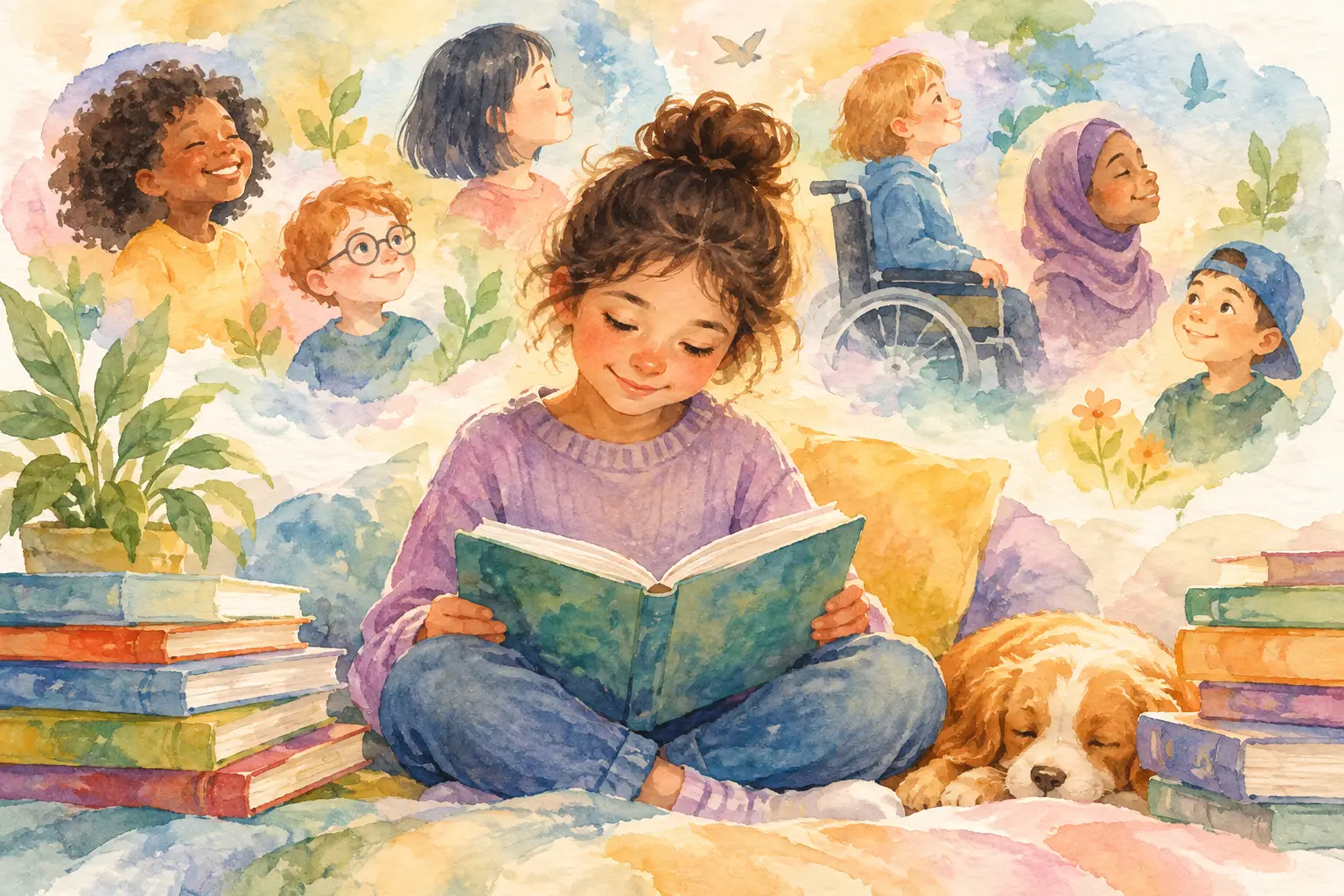
A child notices the things that set them apart long before they have the words to explain what those differences mean. Maybe it is a name classmates mispronounce, a body that works differently, a feeling that arrives too loudly, or a wish that does not match anyone else’s. The best children’s books about self acceptance give little kids a safe place to recognize those moments and a gentle way to talk about them with someone they trust.
For children ages 4 to 10, self-acceptance is not a single lesson to learn. It grows through many small experiences: seeing a character feel left out, hearing an adult say, “Tell me more,” and realizing that differences do not take away anyone’s place in the group. A meaningful book can make room for all of that without turning story time into a lecture.
What makes a self-acceptance book worth sharing?
A book does not need to say “love yourself” on every page to support self-acceptance. Often, the stories that stay with children show a character wrestling with belonging, making a mistake, being misunderstood, or discovering that their own way of moving through the world has value.
Look for books that make a child feel seen while also inviting empathy for people whose experiences are different. The strongest choices leave room for conversation rather than supplying a neat answer too quickly. A child may identify with a character one day and understand a classmate better the next.
It also helps when pictures carry part of the emotional story. Young readers often spot a worried face, a lonely posture, or a hopeful change in the illustration before they can name it. Pause there. Ask what they notice. Their answer may open a much bigger conversation than the words on the page.
Children’s books about self acceptance to read and talk about
For being yourself with joy
Julian Is a Mermaid by Jessica Love is a tender, visually rich story about Julian’s delight in mermaids and his desire to express that delight. When he creates his own mermaid costume, the story gives adults a beautiful chance to consider what support can look like when a child shares something true about themselves. It is brief enough for preschoolers, yet its warmth gives older children plenty to discuss.
After reading, try asking, “How do you think Julian feels when he sees the mermaids?” Then ask, “What are some ways we can help people feel safe being themselves?” Let the conversation stay personal only if the child wants it to. A child can learn empathy through the story without being asked to reveal more than they are ready to share.
Red: A Crayon’s Story by Michael Hall uses a simple idea with a deep emotional pull: a crayon labeled Red is happiest and most capable when he makes blue marks. The story gently questions the pressure to fit a label that does not feel right. Children enjoy the clever crayon world, while adults can help them connect the book to the everyday experience of being told who they are supposed to be.
You might ask, “What changed when Red stopped trying to do things that did not fit?” This can lead to thoughtful talk about talents, interests, and the relief of having someone notice what we do well.
For names, culture, and belonging
The Name Jar by Yangsook Choi follows Unhei, a young girl who has recently moved from Korea and wonders whether she should choose an American name for school. Her name holds family history and identity, but sharing it feels vulnerable in a new classroom. The story respects that tension instead of pretending it disappears instantly.
This is an especially helpful classroom read because every child has a name story, whether it is simple, complicated, cherished, shortened, or often mispronounced. Ask, “What does it feel like when someone makes an effort to say your name correctly?” For a group, invite children to practice listening carefully to one another’s names without requiring anyone to explain their family background.
The Colors of Us by Karen Katz begins when Lena wants to paint a picture of her mother. She soon learns that skin colors are not limited to a few labels, and that people can be described with care, specificity, and appreciation. The book offers a joyful entry point for talking about visible differences without treating them as something awkward to avoid.
Adults can extend the story by noticing the many colors in a shared space, including hair, eyes, clothes, leaves, and walls. The point is not to make children “color-blind.” It is to help them see difference clearly and kindly, with the understanding that every person belongs.
For feeling different in a crowd
The Day You Begin by Jacqueline Woodson speaks to the moment a child realizes that no one else in the room seems to share their food, language, family story, or experience. Its message is not that difference is easy. Instead, it offers the hopeful truth that telling our stories can become a bridge to others.
This book works particularly well for elementary-age children, who may be navigating new schools, friendship groups, and sharper awareness of social comparison. Ask, “Why might it be hard to speak when you feel different?” Follow with, “What could another child do to make the room feel more welcoming?” These questions move self-acceptance beyond private confidence and toward shared responsibility.
The Many Colors of Harpreet Singh by Supriya Kelkar shows a boy who expresses his feelings through the colors of his turbans. When a frightening event leaves him feeling unsafe, his familiar colors change. With time, family care, and a new friendship, Harpreet begins to find his way back to himself.
The story is useful because it makes room for emotions that do not disappear on command. Children can learn that being brave does not mean acting cheerful all the time. Ask, “What colors might match different feelings?” A child can answer with imaginary colors, favorite colors, or no personal answer at all.
For friendship, ability, and taking up space
The Invisible Boy by Trudy Ludwig follows Brian, a quiet child who is regularly overlooked by his peers. When a new student notices him and offers friendship, Brian begins to feel more visible. The book is a strong choice for talking about belonging because it shows the impact of small acts of inclusion.
Self-acceptance should never mean telling a child to simply endure being left out. This story helps adults explain that everyone deserves respect, and that classmates can help create a kinder community. Ask children to notice the changes in Brian’s illustrations. What helps him feel that he matters?
Amazing Grace by Mary Hoffman centers on Grace, a child who loves stories and wants to play Peter Pan in her school play. Others tell her she cannot because she is a girl and because she is Black. Grace’s family and her own imagination help her answer that limitation with possibility.
Read this book with care for its important distinction: confidence matters, but children also need adults who challenge unfair assumptions. A useful question is, “Who helped Grace remember what she could do?” Then consider together how to be that kind of helper for someone else.
For big feelings and a place in the group
The Rabbit Listened by Cori Doerrfeld is not specifically about identity, but it belongs in many self-acceptance conversations because it honors difficult feelings. After Taylor’s creation falls apart, other animals rush in with advice. Rabbit simply stays close and listens.
Children who are learning to accept themselves also need permission to feel disappointed, angry, sad, or confused. Ask, “What did Rabbit do that was helpful?” This small story can help families practice a powerful response: staying near without rushing a feeling away.
The Big Umbrella by Amy June Bates and Juniper Bates offers a welcoming image of an umbrella that makes room for everyone, even when it is crowded. Its playful illustrations make inclusion feel active and expansive. Children can see that welcoming someone new may require shifting over, but it does not mean there is less belonging to go around.
For younger readers, look closely at who fits beneath the umbrella and how the characters make space. For older children, talk about the difference between saying everyone is welcome and making sure people truly feel welcome.
Turning a read-aloud into a real conversation
The book is only the beginning. Before reading, let children study the cover and wonder about the character’s feelings. During the story, pause at one or two meaningful moments rather than interrupting every page. Afterward, choose one open question and give the child time to think.
A simple rhythm can help: notice what happened, name what it may have felt like, and wonder what kindness could look like next. BlueHandTurtle’s Read-And-Talk-With-Me approach builds on this idea by pairing story with conversation and playful visual searching, because younger children often share more when their hands and imaginations are engaged too.
There is no perfect response a child needs to give. Some children will speak immediately; others may return to the story’s question during bath time, at recess, or weeks later. Keep the book available. Keep your listening gentle. When a child learns that their thoughts and feelings have room to exist, self-acceptance has a place to begin growing.
The most lasting gift of these stories may be the quiet message children carry away: I can be fully myself, and I can make room for you, too.
One response to “12 Children’s Books About Self Acceptance”
[…] should not treat any child’s identity as a problem to solve. Choose stories where children are fully themselves – funny, thoughtful, messy, brave, quiet, joyful – not just representatives of a […]